
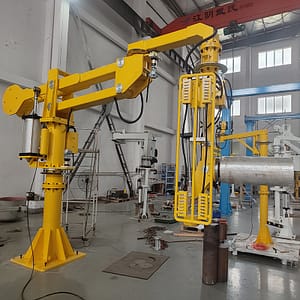
Lifting-assisted pneumatic manipulators (often called pneumatic balancers, vacuum lifters, or air-powered manipulators) are a cornerstone of modern industrial ergonomics and efficiency. Here’s a detailed breakdown of how they deliver improvements in both areas.
The primary goal of these systems is to eliminate the physical strain associated with manual material handling.
Reduction of Musculoskeletal Disorders (MSDs):
Eliminates Heavy Lifting: Workers no longer need to manually lift heavy, bulky, or awkward parts. This drastically reduces forces on the lower back, shoulders, and wrists.
Minimizes Repetitive Strain: Even lighter objects lifted hundreds of times a day cause cumulative trauma. The manipulator takes over this repetitive motion.
Prevents Awkward Postures: Operators can position loads precisely without bending, twisting, or reaching overhead. The manipulator does the “work,” and the human provides only guidance.
“Weightlessness” and Precision Handling:
The core technology (often a pneumatic balancing cylinder) makes the load feel virtually weightless. The operator can lift, lower, tilt, rotate, and position heavy items with minimal force (often just 1-5 kg of guiding force).
This is crucial for delicate positioning tasks, like placing an engine onto a chassis or inserting a glass panel, where both control and lack of strain are essential.
Improved Safety:
Reduces the risk of dropped loads, pinch point injuries, and impact accidents. The manipulator provides a secure grip (via vacuum cups, mechanical grippers, etc.).
Less physical fatigue leads to better overall alertness and reduced risk of incidental accidents.
Inclusivity and Extended Work Life:
Allows a broader range of personnel, regardless of physical strength, to perform the same tasks. This helps retain experienced older workers and creates a more adaptable workforce.
While the ergonomic benefits are clear, the efficiency gains are equally powerful and provide the ROI for the investment.
Dramatically Increased Cycle Speed:
A worker can move a 50 kg part with the same speed and ease as moving 5 kg. Material handling time is significantly reduced.
Motions are faster, smoother, and more direct. There’s no need for “rest breaks” between heavy lifts or for repositioning grips.
Higher Throughput and Consistent Pace:
With reduced fatigue, workers can maintain a consistent, optimal work pace throughout the entire shift, avoiding the slowdowns that come with physical exhaustion.
This leads to more predictable and higher daily output.
Enhanced Precision and Reduced Errors:
The fine control offered by the manipulator leads to exact placement of components. This reduces misalignment, rework, and assembly errors.
In applications like machine tending, it enables faster, more precise loading/unloading of CNC machines, maximizing machine utilization (reducing idle time).
Reduced Product Damage:
Secure, controlled handling means fewer parts are dropped, scratched, or dented. This improves first-pass yield and lowers scrap/rework costs. This is especially critical for finished surfaces, fragile materials, or high-value components.
Optimized Use of Human Labor:
Frees skilled workers from being “human forklifts.” They can focus on value-added tasks like inspection, assembly, quality control, or running multiple stations.
This is a better allocation of human skill and intelligence.
Lower Absenteeism and Turnover:
Improved ergonomics leads to healthier, happier workers. This directly reduces costs associated with absenteeism due to injury, high staff turnover, and the associated recruitment/training costs. A stable, experienced workforce is a more efficient one.

The true power lies in the synergy of these benefits:
An un-fatigued worker is a more alert, precise, and faster worker. You don’t have to trade safety for speed.
Reduced damage and rework mean you get more good products out the door in the same amount of time.
The technology allows for a smoother, more standardized work process, which is easier to integrate into lean manufacturing and continuous improvement (Kaizen) initiatives.
In summary, lifting-assisted pneumatic manipulators transform physically demanding manual handling into a guided, precision operation.
From an Ergonomics Perspective: They act as a protective technology, safeguarding the worker’s health.
From an Efficiency Perspective: They act as a performance-enhancing technology, increasing speed, quality, and throughput.
The investment is justified not just as a “safety cost” but as a strategic productivity tool with a clear and often rapid return on investment through higher output, better quality, and a more resilient workforce.
